Chronos: The LLM that foretells
Introduction§
If LLMs can predict the next word given the context. Time-series forecasting is just that right ? The sequence of the data-points is the context and the forecasting is the next N tokens. And therefore, can language models we used as zero shot forecasters with minimal changes. Chronos explores this problem ?
Why it matters ?§
- With Chronos, we do not need to train on domain-specific data. So, you do not maintain one model per data-set. To put it into perspective, if you are a service provider and you want to predict the load of each of your users, you will have to maintain a model per user or per cluster per user.
- It also does not need to be trained on new data as they come in. You literally do not pay for training the model on an on-going basis.
- As LLMs become more capable, Chronos can leverage all that strength with little effort.
Experiments, Data-sets and Results§
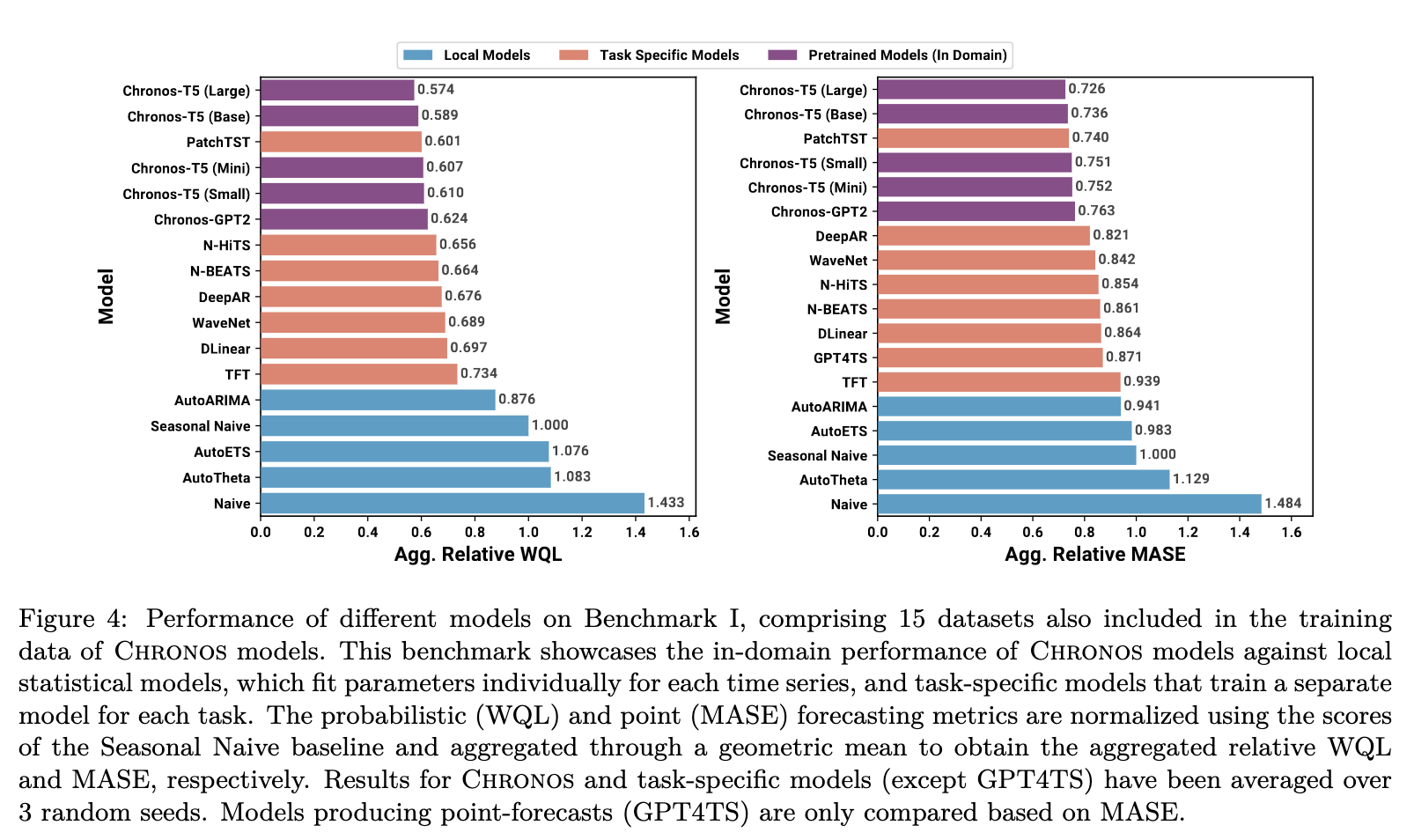
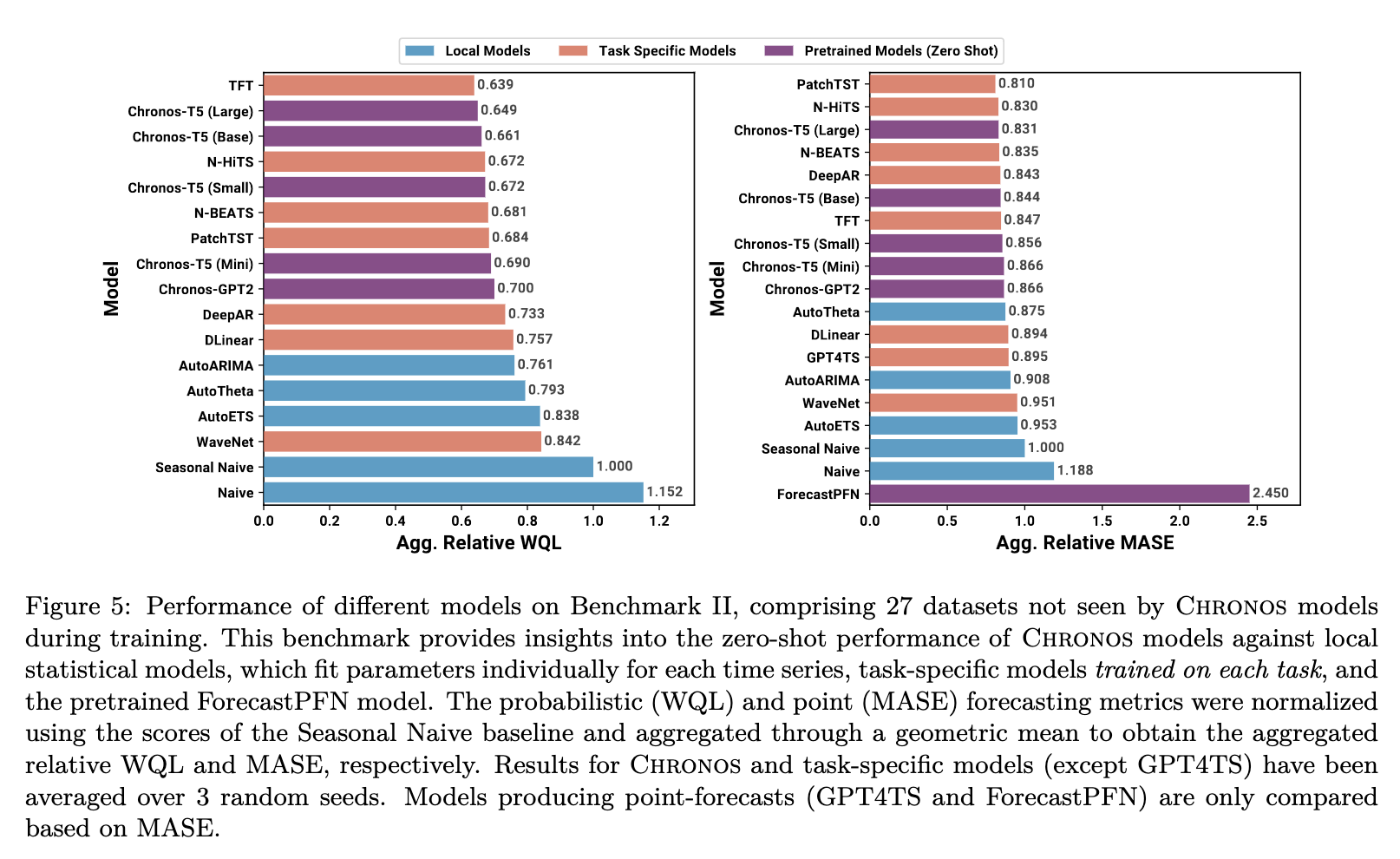
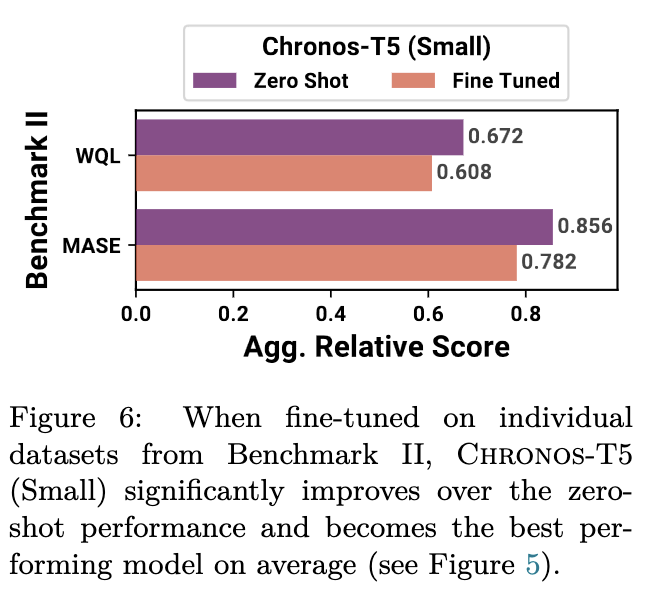
They use the WQL to access the quality of the forecast. The WQL measures the compatibility between the predictive distribution and the ground-truth observation at a uniformly- spaced grid of quantile levels; we compute the WQL on 9 uniformly-spaced quantile levels ${0.1, 0.2, . . . , 0.9}$. We used the mean absolute scaled error MASE to evaluate the point forecast performance. The MASE is defined as the absolute error of the forecast scaled by the historical seasonal error of the time series.
Methodology§
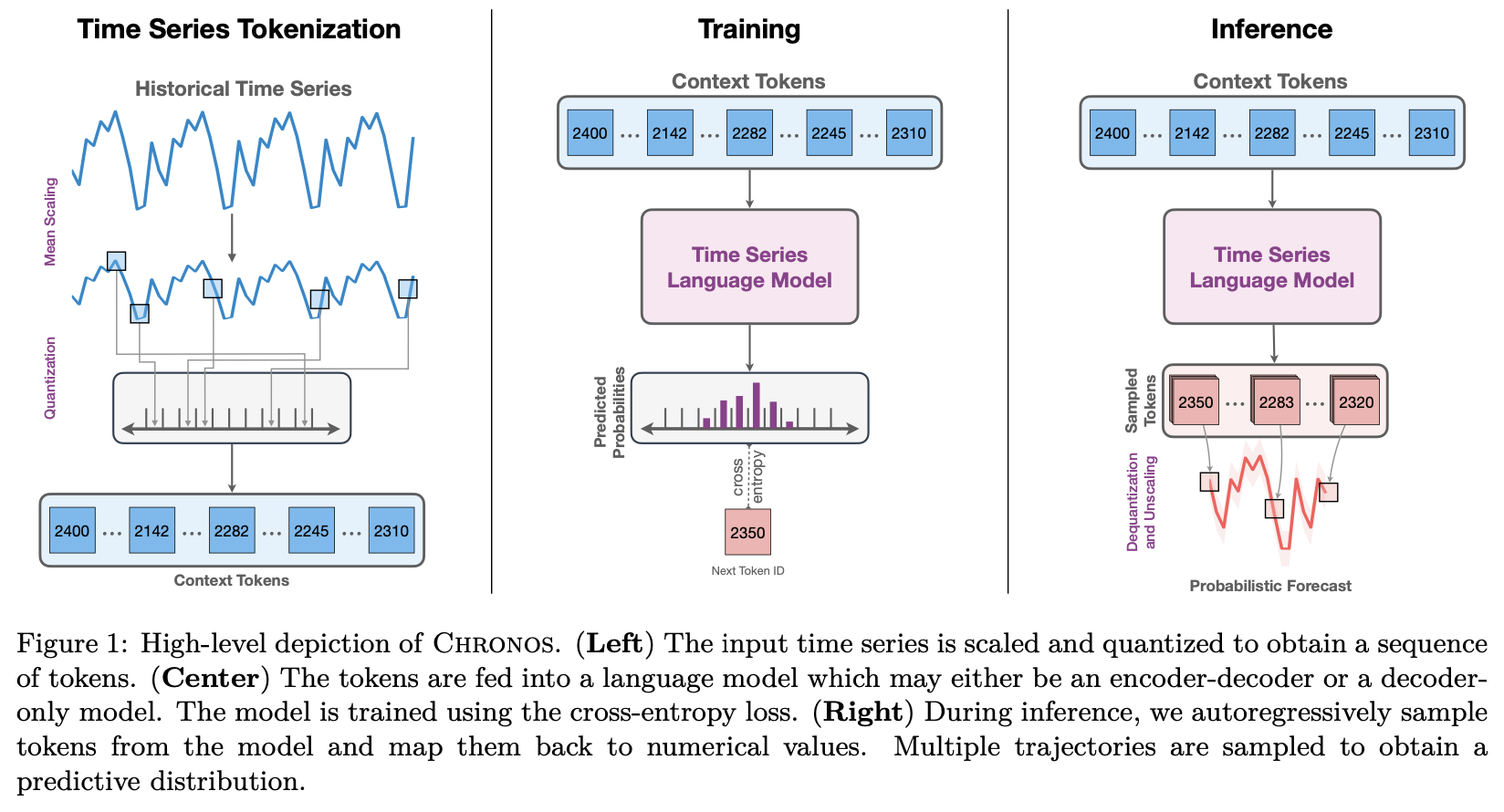
This diagram from the paper sums up how they did it.
Reference§
- https://arxiv.org/pdf/2403.07815.pdf
- https://arxiv.org/pdf/1910.10683.pdf